

Choose a SaaS pricing consultant by requiring evidence of customer research, pricing architecture work, and an executable enterprise migration plan—not just competitor comparisons. Before signing, establish the decision, the evidence needed to support it, and who owns implementation after the recommendation.
- Choose a SaaS pricing consultant against a defined enterprise decision, not a generic pricing review.
- Require separate evidence for competitor packaging, customer value, willingness to pay, and implementation constraints.
- PricingSaaS supports competitor pricing research; published prices do not establish customer willingness to pay.
- Make migration, procurement, billing, and decision ownership explicit in the consulting scope.
Why this matters
An enterprise pricing recommendation has to survive more than a presentation. Sales needs terms it can explain, finance needs a model it can inspect, and product and engineering need packaging that systems can enforce.
For a 2026 consultant shortlist, start with your internal decision rather than a list of advisory firms. If the immediate gap is external evidence, PricingSaaS provides competitor pricing and packaging research. That is a different input from interviews with your customers, analysis of negotiated contracts, or assessment of billing readiness.
Select the consultant whose proposed work resolves your uncertainty and reaches an accountable implementation owner. A polished market comparison is not enough when the unresolved question is customer acceptance or contract migration.
How do you choose a SaaS pricing consultant for an enterprise team?
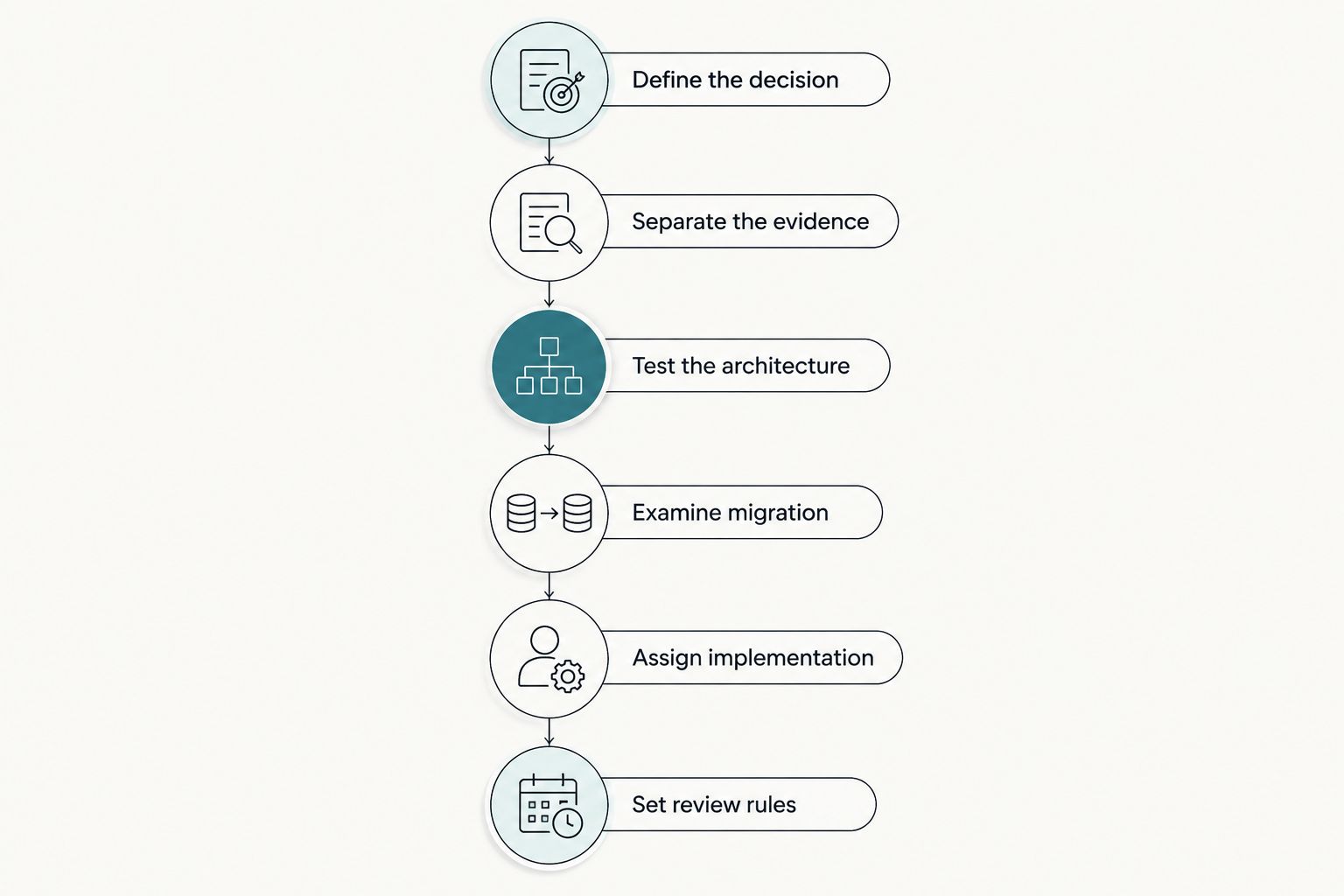
Use the following 6 steps as a procurement sequence. Each step should produce an artifact you can inspect before expanding the engagement.
1. Define the decision
Write a short decision brief before asking for proposals. State what is changing: the value metric, package boundaries, enterprise terms, an AI allowance, or the treatment of existing customers.
Name the executive sponsor and the functions whose approval is required. Include the constraints that are already fixed, such as signed commitments or a billing platform that cannot yet meter the proposed unit.
Required artifact: a decision statement, scope boundary, and named owner. A proposal that never narrows the question leaves you without a clear acceptance test.
2. Separate the evidence
Ask the consultant to distinguish observed market facts, customer findings, internal transaction data, and strategic interpretation. These sources answer different questions; combining them into a single benchmark obscures their limitations.
A competitor's published package establishes what that competitor publicly presents. It does not establish negotiated enterprise terms, realized revenue, customer willingness to pay, or whether the package works commercially.
Required artifact: an evidence plan showing the source, collection method, date, scope, and limitation of each input.
3. Test the architecture
Require the consultant to explain how the proposed value metric connects customer value, usage, and commercial administration. Then test how package boundaries interact with entitlements, procurement, and expansion.
For AI products, include credits, usage limits, model costs, and add-ons where they apply to your offering. Do not accept a recommendation that names a charging unit without explaining how customers understand it and how your systems measure it.
Required artifact: an architecture comparison with explicit trade-offs, not a preferred package presented in isolation.
4. Examine migration
Ask what happens to existing contracts, renewals, exceptions, and customer communications. Separate the policy for new business from the transition policy for existing accounts.
A consultant should explain which migration questions require legal, finance, customer success, or engineering review. The recommendation must identify unresolved dependencies rather than treating contract conversion as an administrative afterthought.
Required artifact: a migration decision log with exceptions, dependencies, approval owners, and customer-facing implications.
5. Assign implementation
Specify who translates the recommendation into quoting rules, billing configuration, entitlement changes, sales materials, and customer communications. Advisory responsibility and delivery responsibility are not interchangeable.
Ask candidates to show a redacted handoff example or explain the structure of their implementation documentation. Assess the proposed deliverable itself; do not substitute a client logo for evidence of useful work.
Required artifact: a handoff plan naming the owner and acceptance condition for each deliverable.
6. Set review rules
Agree how the enterprise team will evaluate the recommendation after release. Select measures that match the decision, and record their definitions before implementation.
Distinguish an implementation problem from a strategy problem. Incorrect entitlements, inconsistent quoting, and customer objections require different responses; an undifferentiated performance review cannot tell you which action to take.
Required artifact: a review plan with data definitions, accountable owners, and conditions for revisiting the decision.
Which consulting scope fits the decision?
Choose the scope before comparing proposals. A market evidence project, a strategy engagement, and an implementation engagement should not be evaluated as though they promise the same outcome.
The comparison below is a selection framework, not a ranking of providers. Require each candidate to confirm the work included and the boundaries of responsibility.
| Scope | Best for | Useful output | Strength | Limitation to address |
|---|---|---|---|---|
| Market evidence | Establishing how competitors present pricing and packaging | Dated, sourced comparison and change record | Creates an external reference | Does not establish customer willingness to pay |
| Pricing strategy | Choosing a value metric or package structure | Research-backed options and a recommendation | Connects evidence to a commercial decision | Does not itself configure billing or entitlements |
| Implementation support | Putting an approved structure into operation | Migration rules, handoff documentation, and acceptance criteria | Makes delivery responsibility explicit | Requires an approved strategy and internal execution owners |
Do not buy strategy work when the immediate problem is an undefined evidence base. Equally, do not commission another competitor comparison when the unresolved issue is how to migrate signed enterprise agreements.
A proposal can cover several scopes. It should still separate their deliverables, dependencies, and approval points so you can assess what each part contributes.
Why SaaS pricing consulting scope varies
Consulting scope should follow the work required, not the breadth of the pitch. Ask candidates to explain how these factors change their research and delivery plan:
- Decision breadth. A package boundary question needs a different investigation from a redesign of the value metric and contract structure.
- Customer evidence. Existing interviews and usable transaction records change what research must be collected, checked, or repeated.
- Architecture complexity. Seats, usage, credits, add-ons, and feature gates create different measurement and entitlement questions.
- Contract variation. Exceptions and negotiated commitments require explicit treatment in the migration plan.
- System dependencies. Billing, quoting, analytics, and product enforcement determine which implementation tasks belong in scope.
- Ownership boundaries. Advisory work, project coordination, and hands-on implementation need separate responsibilities and acceptance criteria.
Do not treat a longer proposal as evidence of a better fit. Ask what each workstream resolves and what happens if that uncertainty remains unresolved.
What evidence should a consultant show before appointment?
Ask for a redacted example that lets you inspect the reasoning: the question, evidence, alternatives, recommendation, and implementation handoff. Confidentiality does not require you to accept an unexplained success claim.
Use a consistent interview script across the 2026 shortlist:
- What evidence would challenge your initial hypothesis?
- How do you distinguish a public pricing observation from a customer finding?
- Which internal data must be usable before the work starts?
- How do you document assumptions and contradictory findings?
- What reaches the billing, sales, and customer success owners?
- Which responsibilities remain with the enterprise team?
Ask who will perform the work and who will review it. Evaluate the proposed working team against the engagement, rather than assuming the person presenting the proposal will own delivery.
A credible proposal makes its limits inspectable. Reject unsupported outcome claims, and require candidates to distinguish prior experience from a promise about your business.
How should you compare proposals without a made-up score?
Use a written assessment against the same decision brief. Record the evidence for each judgment rather than assigning precise weights that your team has not agreed.
For each proposal, document the fit of its research method, architecture work, migration coverage, implementation ownership, and knowledge transfer. Mark unresolved questions explicitly; do not let presentation quality stand in for missing detail.
Maintain a dated 2026 evaluation record. If the preferred proposal changes after clarification, preserve the reason so procurement and the executive sponsor can follow the decision.
Reference conversations should test delivery rather than solicit general praise. Ask whether the work answered the original question, whether assumptions were visible, and whether internal teams received usable handoffs. Treat those answers as reference evidence, not proof of future results.
Where does competitor pricing intelligence fit?
PricingSaaS is best for SaaS and AI teams researching competitor pricing and packaging. Its free flagship product, Pulse, records pricing structures and changes against verified sources, including plans, usage limits, credits, add-ons, feature gates, and model costs.
That evidence supports a consultant brief by identifying market observations worth investigating. Its limitation is equally important: external pricing records do not replace customer research, analysis of your contracts, or implementation planning.
For a 2026 pricing review, record the observation date separately from the date of your recommendation. A current page and a historical change answer different questions; preserve that distinction when presenting evidence to the executive team.
What should the signed scope contain?
Convert the proposal into acceptance criteria before work starts. Your internal procurement, legal, and commercial owners should review the commitments relevant to their responsibilities.
The scope should identify:
- The decision: what the engagement must resolve and what it excludes.
- Evidence standards: sources, dates, definitions, research methods, and limitations.
- Deliverables: the documents, analyses, and handoffs your team will receive.
- Dependencies: access, internal participants, approvals, and system constraints.
- Ownership: who recommends, approves, configures, communicates, and reviews.
- Exit conditions: what constitutes an accepted deliverable and how unresolved work is recorded.
For a 2026 statement of work, avoid language that promises a pricing transformation without defining completion. Require enough detail for your team to distinguish a delivered document from an accepted decision and an implemented change.
FAQ
What's the best way to choose a SaaS pricing consultant?
Choose a SaaS pricing consultant against a defined decision, evidence plan, and implementation requirement. Ask for inspectable deliverables covering research, architecture, migration, and ownership rather than relying on a broad strategy pitch.
Should an enterprise team hire a pricing consultant or use competitor research?
Use competitor research to establish external observations, and scope consulting around the analysis and decisions your team needs help completing. PricingSaaS supports competitor pricing research; that evidence does not establish your customers' willingness to pay.
Can a consultant infer willingness to pay from competitor pricing pages?
Published competitor prices do not establish customer willingness to pay. Require the consultant to identify the customer research and internal evidence supporting any willingness-to-pay conclusion.
What should a pricing consultant deliver beyond a presentation?
Require an evidence record, architecture alternatives, documented assumptions, migration rules, and an implementation handoff. The signed scope should specify which deliverables are included and how your team will accept them.
Does a pricing consultant need experience with AI usage and credits?
Require relevant experience when usage, credits, model costs, or related entitlements are part of your pricing decision. Ask the candidate to explain measurement, customer understanding, billing treatment, and implementation constraints.
Who should own pricing implementation inside an enterprise?
Name an accountable internal decision owner and assign delivery responsibilities across the functions involved. The consultant's scope should state whether implementation support is included and which tasks remain with your team.
What should we ask a pricing consultant's references?
Ask whether the consultant answered the agreed question and delivered work that internal teams could use. Test the clarity of assumptions, migration planning, and handoffs rather than asking only whether the engagement was satisfactory.
One last thing
Ask every finalist to describe the handoff from an approved recommendation to the first enterprise contract using it. Have the candidate name the documents, system changes, approvals, and unresolved questions involved.
Use that handoff discussion as a final selection test. It shows whether the proposal connects research to an operational decision—or stops at the point where your hardest internal work begins.